

The Tempest’s Islamic Ghosts
The Tempest is often seen as Shakespeare’s colonial play and spent considerable time living up to this name by being examined in the context of English colonialism in North America and Ireland. However, the actual location of the play is in the Mediterranean. In fact The Tempest harnesses the Islamic Worlds of its Mediterranean location rendering Islam a central concern and shadow over the play. This is achieved by Shakespeare’s decision to engage two leading Islamicate lands: Tunis and Algiers. These states are offered up as powers that are legitimised, engaged with, even determinedly married into. Both Tunis and Algiers were strong in the early modern English imagination, emerging from stages to pulpits, pamphlets to Parliament. The Tempest is therefore yet another “Turk play” of its time which navigates the Mediterranean Islamic Worlds, much of which was governed by the Ottomans. What is notable, however, is that while many of Shakespeare’s contemporary writers offered fantasies of overcoming Islam, The Tempest leans into the reality of a Mediterranean Islam which cannot be contained. This blog will particularly look at the play’s engagement with Tunis to illustrate this.
The Ottoman empire held three North African regencies loosely governed by the Ottomans but functioning with some political and commercial autonomy: Algiers, Tunis and Tripoli. The government appointed by the Ottomans in Algeria formed the model employed by Istanbul for Tunis and Tripoli. Following the 1571 Battle of Lepanto and the relative weakening of Ottoman maritime authority in the Mediterranean, the regencies gained a greater degree of autonomy, setting their own maritime power apart in the Mediterranean. A key aspect of the naval activities of the regencies was in privateering (legalised piracy), targeting Western European vessels with goods and peoples captured for trafficking and ransom. Tunisian vessels primarily roved the eastern Mediterranean and Adriatic. Western European vessels were similarly active in targeting, abducting and enslaving Ottoman subjects with one writer, Ahmad ibn Qasim, reporting over 5,500 Muslim captives in Malta and Venice alone in the first decade of the seventeenth century.1 Concern regarding English piracy and abduction against his people led the Algerian ruler to write to James I in 1624 to negotiate the release of captives.2
English men and women travelled to the North African regencies for trade, employment or settlement throughout the seventeenth century. Many signed up to fight for Muslim armies, such that James I issued repeated proclamations for Englishmen to return home to serve their king.3 Most of the English who ended up in Algiers and Tunis were, however, captives who tended to be held for ransom or enslaved. To make matters worse, many of the privateers were themselves English or other Western Europeans who served the Ottomans and often converted to Islam. Privateering by English converts or ‘renegades’ was on such a scale that it became a source of diplomatic tension. In 1603 England’s Venetian ambassador decried how the beylerbey of Tunis “has made vast gains by keeping well with English privateers”.4 That Shakespeare chose two of the most powerful Ottoman regencies as a backdrop to The Tempest is far from incidental. Neither would The Tempest be the exception: from the Ottoman fleets and Moorish protagonist in Othello to the Moroccan prince of The Merchant of Venice, the unavoidable Islamic Worlds haunt Shakespeare. In The Tempest, that haunting takes place from several fronts casting a multilayered shadow. One example is the marriage of Claribel, Princess of Naples, to the King of Tunis.
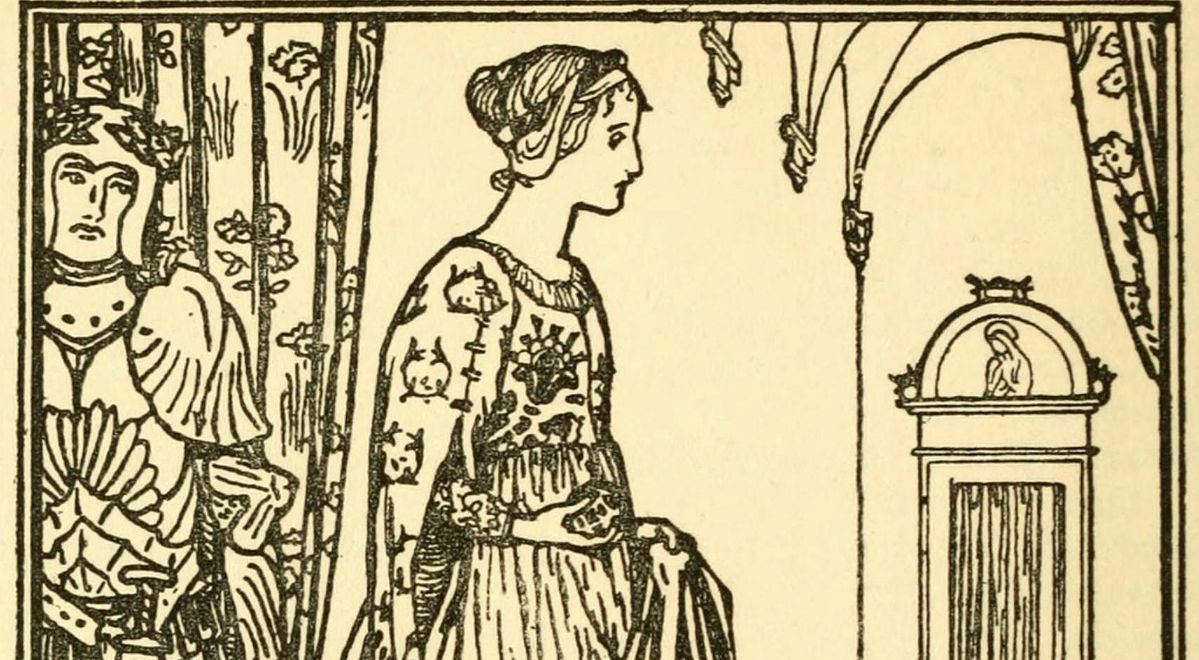
Claribel’s marriage offers the opening event of the play: the ship subject to Prospero’s storm is returning from her wedding at Tunis. In the early seventeenth century, a marriage between a white, virginal, Christian princess and an African Muslim king was an unimaginable and egregious matter, in many ways realising European Christendom’s worst fears. Such alliances were popularly and anxiously examined in English literary history. Shakespeare’s own Othello navigates this in the relationship between Desdemona and the Islamicate-coded Moor, Othello. Yet while Othello is a convert to Christianity and serves Venice, Claribel is forced into her alliance by her father and abandoned to be “queen of Tunis”, despite having “kneeled to and importuned otherwise”.5
Early modern marriages between European foreign royal houses were common with partnerships engineered for strategic alliances. Once agreed, they were usually conducted by proxy between geographically separated fiancés. English king James I’s marriage to Anne of Denmark was conducted by proxy at Kronburg Castle. Their son, Charles I, was married by proxy to Henrietta Maria of France at Notre Dame. Claribel’s marriage breaks from this: she is delivered to her African Muslim spouse in Tunis with the marital rites conducted ‘in Afric’ on Tunisian soil in an undoubtedly Muslim ceremony.6 While she may retain her faith given marriage to Christian and Jewish women is recognised in Islamic law, Claribel is destined to birth royal Muslim heirs for the King of Tunis.7 This marriage, conducted unapologetically and wholly on Tunisian terms, evokes the power and threat of the Muslim states in the Mediterranean.
Alonso effectively traffics his daughter to Tunis, not unlike the renegade privateer serving the Ottoman regency. However, Shakespeare frames the marriage of Claribel as legitimate. He does not challenge or imagine a victory for Europe but offers an alliance between Christendom and the Islamic Worlds that creates more peaceful and lucrative relations as a result. Indeed, Claribel’s uncle Sebastian remarks, "Twas a sweet marriage, and we benefit well in return"; this is an alliance of significant advantage for Naples.8 Alonso may ‘not bless our Europe with your daughter, / But rather lose her to an African’ but his is a calculated, legitimate and legitimising move that serves him and his state well.9 Tunis was a key site of military conflict, trade and diplomatic partnerships between Christians and Muslims, particularly the Spanish Hapsburgs and Turkish Ottomans. Alonso’s action is not only pragmatic but well within European state systems of the time, in which royal women were used as pawns to serve state advancement. Shakespeare offers the dynamics of the Mediterranean Islamic powers in his time and the pragmatism needed to navigate it.
The Tempest does not engage Islam in the more typical manner of Renaissance Turk Plays with exaggerated representations of imagined victory for Christendom. Instead, it lends the Islamic Mediterranean a legitimacy and normalcy that acknowledges contemporary dynamics of the region. The Barbary powers are a non-negotiable part of the Mediterranean who are engaged with and even married into. The Tempest does not challenge the Islamic Mediterranean because in Shakespeare’s Mediterranean it is beyond reasonable challenge. This frames the play from the marriage of Claribel at the very beginning, haunting the events that take place thereafter.
Title Image: From: 'The King's Fair Daughter Claribel' from Freemantle & Co. Edition of The Tempest, Robert Anning Bell, 1901, accessed here
