

MEMOs Member Activities: New Publications from Iman Sheeha and Jessica L. Minieri
Congratulations to our News Editor, Jessica L. Minieri, and one of our team members, Dr. Iman Sheeha, for publishing exciting new articles and book chapters this past month! Their publications explore themes of race, gender, and violence in the Mediterranean world and along Britain's shorelines between the later Middle Ages and the end of the seventeenth century.
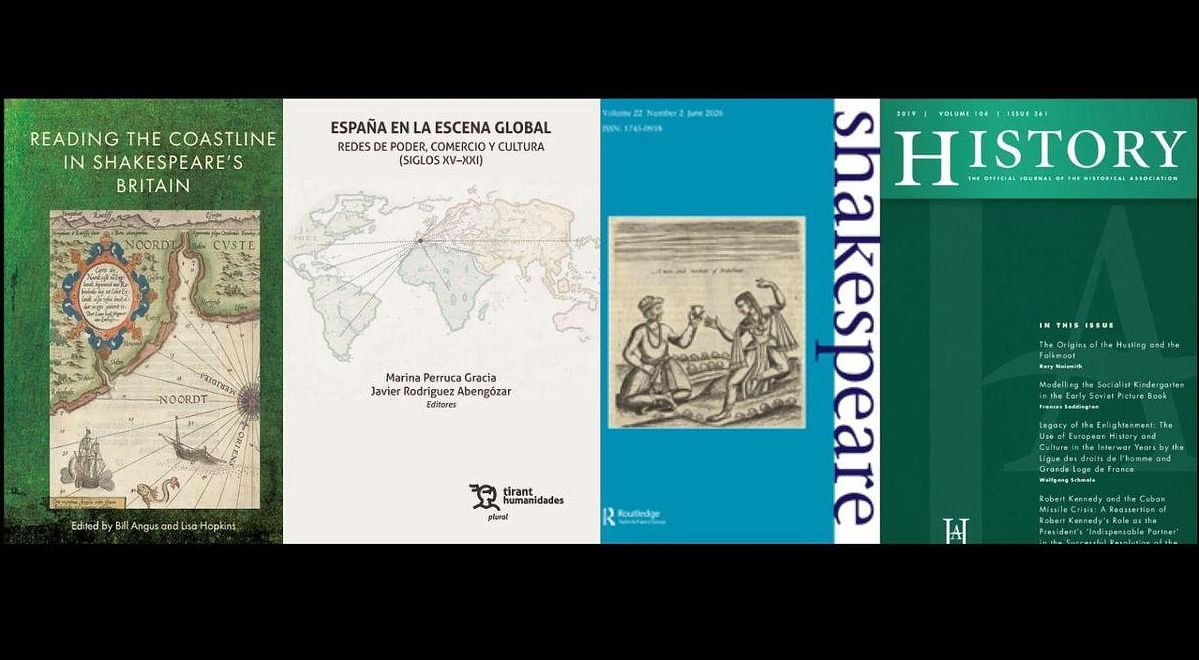
Iman's article, "‘The Best-regarded Virgins of Our Clime’: Unseen Black Women, Race, and the Construction of White Femininity in The Merchant of Venice" has just been published in Shakespeare. This important article focuses on the role of Black women in Shakespeare's Merchant of Venice and how, through critical race studies and whiteness studies, we can look beyond the text's marginalization of these women and their voices. It's in Open Access and can be found here. Iman has also published a new book chapter, "The North African Port of Tunis as a Space of Mutability in Philip Massinger’s The Renegado (1624)" in Reading the Coastline in Shakespeare’s Britain edited by Bill Angus and Lisa Hopkins. Reading the Coastline focuses on the ways in which early modern writers thought about the shoreline and port cities in Britain and beyond in the early modern period. Iman's fantastic contribution focuses on Tunis and its imagining in The Renegado.
Jessica's article, "Seizing the Regno: Relics and the Politics of Aragonese Expansion in the Fifteenth-Century Mediterranean", was just published in Open Access with History: The Journal of the Historical Association. This article focuses on the role of religious relics in Alfonso V of Aragon's establishment of a Mediterranean maritime empire in the western and central Mediterranean, particularly in the Kingdom of Naples. This interdisciplinary article brings together art history and historical studies to reposition relics--and their theft--in the Aragonese conquest of Naples. Jessica has also published an exciting new book chapter "'Besieged by Such Despair: La Reyna de Mallorques and the Voices of Imprisoned Medieval Women" in España en la escena global. Redes de poder, comercio y cultura (siglos XV-XXI) edited by Marina Perruca Gracia and Javier Rodriquez Abengózar. This chapter argues that the Catalan text La Reyna de Mallorques offers new insight into how we can understand medieval imprisoned women, their voices, and how, in this case, this text remains the sole surviving document written by a captive of King Peter IV of Aragon.
Congratulations to both of our MEMOs authors! You can read more about their work here and here.